
What is Debt to Income Ratio for a mortgage loan approval in Kentucky?
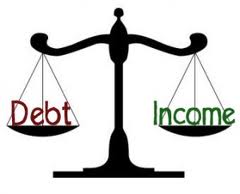
If you are looking to purchase your first home in Kentucky, A key term you will need to know about is your “debt-to-income ratio,” which refers to the figure you get when you add up all your monthly debt payments and then divide that number by your monthly income.
The debt-to-income ratio gives potential mortgage lenders an idea of how much your expenses are each month in comparison to how much you actually earn.
Depending on where you are in the home-buying process, you may have a good idea of where your credit score lands. As important as a strong credit score is, however, a favorable debt-to-income ratio is arguably of equal importance, and it may be just as closely scrutinized by any potential mortgage lenders.
Front-end ratios vs. back-end ratios
When you try and obtain a loan, expect possible lenders to review two types of debt-to-income ratio. The front-end ratio, or “housing” ratio, gives them an idea of what percentage of your monthly income would have to go toward home-related expenses, such as the mortgage, associated taxes and any additional fees, such as homeowner’s association expenditures, that may apply.
The back-end ratio, on the other hand, takes a more cumulative approach and compares your monthly income to all your expenses, from the housing-related ones to school tuition, child support, car payments and any other financial obligations you may have.
What income is used to qualify your debt to income ratios for a Kentucky Mortgage Loan Approval?
- paystubs
- Tips and bonuses
- Pension
- Child support
- Alimony
- Social Security
- What type of debts are used in your debt to income ratio?
- debts listed on credit report
- child support payment
- alimony payment
- house payment to include pi, taxes, home insurance and mi
- 401k loans against retirement account
Monthly bills such as your current rent, car insurance, cell phone bill, utilities bills are not included in your debt to income ratio to qualify for a new mortgage loan
The ideal debt-to-income ratio for Kentucky FHA, VA, USDA and Conventional Mortgage Loans are as follows below:
The exact percentage your lender will look for will likely vary based on factors such as your credit score, how much you have in your savings account and how much you have to put down for your down payment. Most standard lenders, however, prefer to see something in the ballpark of 31 percent for a front-end ratio. For a back-end ratio, they will likely look for a percentage that does not exceed 45 to 50 percent. Federal Housing Authority lenders typically look for a front-end ratio of about 31 percent and a back-end ratio that does not exceed 55 percent, while conventional loans will center around a back-end ratio of 45% to 50% so you can get mortgage insurance through the private market.
On Kentucky VA loans, I have seen approvals as high as 65% on higher credit scores, but if you have lower credit scores, say under 680, then the debt to income ratio will be lowered to compensate for the risk of a past bad credit history.
On Kentucky USDA Loans, they are much more strict on debt to income ratios whereas they will not go past 45% on the back-end ratio, and usually the front end ratio can be no more than 28%
Debt-to-Income Ratio: What It Is and Why You Should Care for a Kentucky Mortgage Loan for Kentucky Mortgage Loan Approval
| Acceptable Ratios | ||
| Housing | Debt to Income | |
| Conventional | 28% | 41-50% |
| FHA | 29% | 41-56.5% |
| VA USDA/RHS KHC |
29% 29% 40% |
41-65% 41-45% 50% |
| Higher ratios may be accepted with compensating factors: low loan value, large cash reserves after closing, high credit scores, etc, | ||
What is your debt-to-income ratio?
How to calculate your front-end DTI for a Kentucky Mortgage Loan Approval
What is your debt-to-income ratio?
How to calculate your front-end DTI for a Kentucky Mortgage Loan Approval
How lenders use your DTI for a Kentucky Mortgage Loan Approval
Lower a high ratio
Simply put, the most effective way to lower a high debt-to-income ratio and therefore make yourself more appealing to lenders is to pay off some of your debt. If you have a cosigner who may be willing to help you out with a loan, that could serve as an additional method of getting around a high ratio.
—



Disclaimer: No statement on this site is a commitment to make a loan. Loans are subject to borrower qualifications, including income, property evaluation, sufficient equity in the home to meet Loan-to-Value requirements, and final credit approval. Approvals are subject to underwriting guidelines, interest rates, and program guidelines and are subject to change without notice based on applicant’s eligibility and market conditions. Refinancing an existing loan may result in total finance charges being higher over the life of a loan. Reduction in payments may reflect a longer loan term. Terms of any loan may be subject to payment of points and fees by the applicant Equal Opportunity Lender. NMLS#57916http://www.nmlsconsumeraccess.org/
— Some products and services may not be available in all states. Credit and collateral are subject to approval. Terms and conditions apply. This is not a commitment to lend. Programs, rates, terms and conditions are subject to change without notice. The content in this marketing advertisement has not been approved, reviewed, sponsored or endorsed by any department or government agency. Rates are subject to change and are subject to borrower(s) qualification.
Mortgage Loan Officer
Text/call: 502-905-3708
email:kentuckyloan@gmail.com


 Kentucky First-Time Home Buyer Programs | USDA, FHA, VA & KHC Loans
Reblogged this on Louisville Kentucky Mortgage Loans and commented:
Think back to the last time you financed a purchase — be it a home, automobile, or what have you… You may remember having heard the term “debt-to-income ratio.” Today I want to spend some time going over exactly what this ratio is, and to also touch on how it can effect your personal finances.
What is your debt-to-income ratio?
Commonly referred to as your “DTI,” your debt-to-income ratio is a personal finance benchmark that relates your monthly debt payments to your monthly gross income.
As an example… Let’s say that your gross monthly salary is $5,000 and you are spending $2,800 of it toward monthly debt payments. In that case, your DTI would be an unhealthy 56%.
This version of your DTI is sometimes referred to as your “back-end” DTI. This is often broken down further to give a front-end debt-to-income ratio, which is a component of your back-end DTI.
How to calculate your front-end DTI for a Kentucky Mortgage Loan Approval
Your front-end DTI is calculated by dividing your monthly housing costs by your monthly gross income. Front-end DTI for renters is simply the amount paid in rent, whereas for homeowners it is the sum of mortgage principal, interest, property taxes, and home insurance (i.e., your PITI) divided by gross monthly income.
From above, if that $2,800 in debt payments is attributable to $1,500 in housing costs and $1,300 in non-housing costs, then your front-end DTI is $1,500/$5,000 = 30% (and your back-end ratio is still 56%, as calculated above).
LikeLike