Mortgage After Bankruptcy in Kentucky: 2026 FHA, VA, USDA, Conventional & KHC Loan Options
Filing bankruptcy does not automatically mean you can never buy a home again. In many cases, Kentucky homebuyers can qualify for a mortgage after Chapter 7 or Chapter 13 bankruptcy once the required waiting period has passed, credit has been re-established, and the loan meets underwriting guidelines.
The key is knowing which mortgage program fits your timeline: FHA, VA, USDA Rural Housing, Conventional, or Kentucky Housing Corporation (KHC) down payment assistance.
If you are trying to buy a home in Kentucky after bankruptcy, the first step is not guessing. The first step is reviewing your actual mortgage credit report, bankruptcy discharge or dismissal dates, income, debts, and down payment options.
Can You Buy a House in Kentucky After Bankruptcy?
Yes, but the answer depends on five major items:
- Whether you filed Chapter 7 or Chapter 13 bankruptcy
- The bankruptcy discharge date, dismissal date, or current payment-plan status
- Your current mortgage credit scores
- Your debt-to-income ratio
- Whether you are applying for FHA, VA, USDA, Conventional, or KHC financing
A bankruptcy may be a major credit event, but lenders are also looking at what happened after the bankruptcy. Have you paid bills on time? Did you avoid new late payments? Do you have stable income? Do you have enough funds for closing costs, reserves, or required down payment?
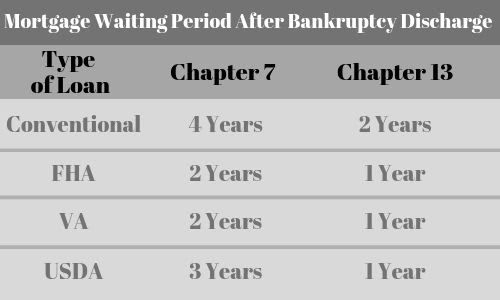
2026 Kentucky Mortgage Waiting Periods After Bankruptcy
| Loan Program | Chapter 7 Bankruptcy | Chapter 13 Bankruptcy | Common Down Payment | Best Fit |
|---|---|---|---|---|
| FHA Loan | Typically 2 years from discharge | May be possible after 12 months of on-time plan payments with court/trustee permission, or after discharge depending on underwriting | 3.5% down with qualifying credit | Buyers rebuilding credit after bankruptcy |
| VA Loan | Typically 2 years from discharge | Often possible after 12 months of satisfactory Chapter 13 payments, depending on lender and trustee/court approval | 0% down for eligible Veterans | Eligible Veterans, active-duty military, and qualifying surviving spouses |
| USDA Rural Housing | Generally 3 years from discharge, though GUS findings and credit exceptions matter | May be possible with 12 months of on-time plan payments and court/trustee approval | 0% down in eligible rural areas | Eligible Kentucky buyers purchasing in USDA-eligible areas |
| Conventional / Fannie Mae | Generally 4 years from discharge or dismissal | 2 years from discharge or 4 years from dismissal | 3% to 5% down for eligible buyers | Borrowers with stronger credit after bankruptcy |
| KHC Down Payment Assistance | Follows the underlying loan program rules | Follows the underlying loan program rules | Can be paired with eligible FHA, VA, USDA/RHS, or Conventional KHC first mortgages | Kentucky buyers needing help with down payment or closing costs |
| Non-QM / Portfolio Loans | May allow shorter seasoning in some cases | May allow shorter seasoning in some cases | Usually larger down payment | Borrowers who do not fit standard agency guidelines |
Important note: Non-QM or portfolio loans are not the same as FHA, VA, USDA, Conventional, or KHC loans. They may require a larger down payment, higher credit score, higher interest rate, more reserves, or stronger compensating factors. They should be reviewed carefully before assuming they are the right path.
FHA Loan After Bankruptcy in Kentucky
FHA loans are often one of the most flexible mortgage options for Kentucky buyers after bankruptcy. FHA financing may allow a lower down payment, flexible credit review, and manual underwriting in certain situations.
FHA After Chapter 7 Bankruptcy
For a Chapter 7 bankruptcy, most FHA borrowers need to wait at least two years from the bankruptcy discharge date. The discharge date is not always the same as the filing date, so this date needs to be verified from the bankruptcy paperwork or credit report.
FHA After Chapter 13 Bankruptcy
For Chapter 13 bankruptcy, FHA may allow a borrower to qualify while still in the repayment plan if at least 12 months of payments have been made on time and the borrower receives permission from the bankruptcy court or trustee to enter into the mortgage transaction.
This is not automatic. The lender still has to document income, debts, assets, credit history, and the full mortgage payment.
View HUD’s FHA bankruptcy guidance
VA Loan After Bankruptcy in Kentucky
VA loans can be one of the strongest mortgage options after bankruptcy for eligible Veterans, active-duty service members, and qualifying surviving spouses.
VA does not automatically deny a borrower simply because of a prior bankruptcy. The lender must determine whether the borrower is now a satisfactory credit risk and has enough stable income to repay the new loan.
VA After Chapter 7 Bankruptcy
A VA loan commonly requires a two-year waiting period after Chapter 7 bankruptcy discharge.
VA After Chapter 13 Bankruptcy
For Chapter 13 bankruptcy, some VA lenders may consider approval after at least 12 months of satisfactory payments, depending on the full file and any required trustee or court approval.
VA can be powerful because eligible borrowers may qualify with no down payment and no monthly mortgage insurance. However, credit score overlays, debt-to-income ratio, residual income, and payment history still matter.
View the VA Home Loan Buyer’s Guide
USDA Rural Housing Loan After Bankruptcy in Kentucky
USDA Rural Housing loans are popular in Kentucky because they may offer 100% financing in eligible rural areas. Many Kentucky counties and smaller communities may have USDA-eligible properties.
USDA After Chapter 7 Bankruptcy
For USDA loans, a Chapter 7 bankruptcy discharged more than 36 months before submission is generally not considered adverse credit. If the discharge was within the previous 36 months, approval may depend on GUS underwriting findings or whether a credit exception is required.
USDA After Chapter 13 Bankruptcy
For Chapter 13 bankruptcy, USDA may allow financing when the borrower has made the required payments on time and has written permission from the bankruptcy court or trustee to enter into the mortgage transaction. Manual files commonly require documentation that at least 12 months of the repayment plan has elapsed.
USDA is not only about credit. The property must be eligible, the household income must fit USDA income limits, and the borrower must meet debt-to-income and repayment ability requirements.
View USDA HB-1-3555 Chapter 10 Credit Analysis
Conventional Loan After Bankruptcy in Kentucky
Conventional loans through Fannie Mae or Freddie Mac usually have longer waiting periods than FHA, VA, or USDA, but they may be a good option for borrowers who have rebuilt credit and want to avoid government loan mortgage insurance structures.
Conventional After Chapter 7 Bankruptcy
Fannie Mae generally requires a four-year waiting period after a Chapter 7 or Chapter 11 bankruptcy discharge or dismissal. A two-year period may be possible if documented extenuating circumstances apply.
Conventional After Chapter 13 Bankruptcy
For Chapter 13 bankruptcy, Fannie Mae generally requires two years from the discharge date or four years from the dismissal date. If the Chapter 13 was dismissed due to documented extenuating circumstances, a shorter period may be possible.
Conventional loans can be more sensitive to credit scores, debt-to-income ratio, mortgage insurance pricing, and reserves. A borrower with a recent bankruptcy may be better served starting with FHA, VA, USDA, or KHC depending on eligibility.
View Fannie Mae bankruptcy waiting period guidance
KHC Down Payment Assistance After Bankruptcy
Kentucky Housing Corporation, commonly called KHC, can be a strong option for Kentucky homebuyers who need help with down payment and closing costs. KHC down payment assistance may be used with eligible KHC first mortgage programs, including FHA, VA, RHS/USDA, and Conventional options.
KHC does not replace the bankruptcy rules of FHA, VA, USDA, or Conventional underwriting. Instead, the borrower must meet the underlying loan program requirements and KHC program requirements.
For many KHC loan programs, government loans require a minimum credit score of 620, while KHC conventional options generally require a 660 minimum score. KHC’s Regular DAP is structured as a repayable second mortgage and may provide assistance for down payment, closing costs, and prepaids.
View KHC down payment assistance
What Lenders Look for After Bankruptcy
The waiting period is only one part of the approval. A Kentucky mortgage lender will also review:
- Mortgage credit scores from all three bureaus
- Payment history after bankruptcy
- New collections, charge-offs, judgments, or late payments
- Income stability and job history
- Debt-to-income ratio
- Bank statements and available funds
- Rental history, especially on manually underwritten loans
- Bankruptcy discharge, dismissal, or payment-plan documents
- Trustee or court permission if still in Chapter 13
The strongest file after bankruptcy is one that shows stable income, no new late payments, reasonable debts, and a clear explanation of what caused the bankruptcy and why it is unlikely to happen again.
Documents You May Need for a Mortgage After Bankruptcy
Be prepared to provide:
- Bankruptcy discharge or dismissal paperwork
- Full bankruptcy schedules if requested
- Chapter 13 payment history from the trustee
- Written trustee or court permission, if applicable
- Most recent pay stubs
- Last two years of W-2s or tax returns, depending on income type
- Most recent bank statements
- Letter of explanation for the bankruptcy
- Documentation showing re-established credit
Common Mistakes Kentucky Buyers Make After Bankruptcy
1. Assuming the filing date starts the clock
Most mortgage waiting periods are measured from the discharge date, dismissal date, foreclosure completion date, or other documented event date. The filing date is not always the controlling date.
2. Taking on new debt too quickly
A new car payment, personal loan, or high credit card balance can damage debt-to-income ratio and credit score recovery.
3. Ignoring the mortgage credit score
Consumer scores from free apps are not always the same scores used for mortgage approval. Mortgage lenders typically review all three credit bureaus and use the middle qualifying score.
4. Waiting until after making an offer
If you had a bankruptcy, foreclosure, short sale, or deed-in-lieu, get pre-approved before shopping aggressively. You do not want to discover a seasoning issue after writing a purchase contract.
5. Assuming all lenders follow the same overlays
FHA, VA, USDA, Conventional, and KHC guidelines set the baseline, but lenders may have additional overlays. One lender may say no while another lender may have a path forward.
Best Loan Options After Bankruptcy in Kentucky
The best program depends on your full situation:
- FHA may be best if you are rebuilding credit and need a low down payment.
- VA may be best if you are eligible for VA benefits and want zero down payment with no monthly mortgage insurance.
- USDA may be best if the property is in an eligible rural area and household income fits USDA limits.
- KHC may help if you need down payment or closing cost assistance and meet program requirements.
- Conventional may work better after more credit recovery and stronger scores.
- Non-QM may be a backup option, but it should be reviewed carefully due to pricing, down payment, and risk.
Frequently Asked Questions About Buying a Home After Bankruptcy in Kentucky
How soon can I buy a house after Chapter 7 bankruptcy in Kentucky?
For FHA and VA loans, many borrowers need to wait about two years from the Chapter 7 discharge date. USDA is commonly three years, while Conventional is generally four years. Exceptions may exist, but they require strong documentation and are not automatic.
Can I get a mortgage while still in Chapter 13 bankruptcy?
Yes, it may be possible with FHA, VA, or USDA financing if you have made at least 12 months of on-time bankruptcy plan payments and receive permission from the bankruptcy court or trustee. The lender must still approve the full loan file.
Can I use KHC down payment assistance after bankruptcy?
Possibly. KHC follows the underlying loan program rules, so you must qualify for the first mortgage, meet KHC credit score requirements, and satisfy KHC program guidelines.
Does bankruptcy have to be completely off my credit report before I buy?
No. A bankruptcy can remain on the credit report for years, but mortgage eligibility is based on program waiting periods, re-established credit, income, debts, assets, and underwriting approval.
What if my bankruptcy included a mortgage or foreclosure?
This can be more complicated. The lender may need to determine whether the mortgage debt was discharged in bankruptcy and whether a separate foreclosure waiting period applies. Documentation matters.
What credit score do I need after bankruptcy?
It depends on the loan program. FHA may allow lower scores in general underwriting, but KHC government loans commonly require 620. KHC conventional options generally require 660. Many lenders also have their own credit score overlays.
Get a Kentucky Mortgage Review After Bankruptcy
If you filed Chapter 7 or Chapter 13 bankruptcy and want to buy a home in Kentucky, the smartest move is to review the file before you start shopping.
I can review your credit, income, bankruptcy timeline, down payment options, and program fit for FHA, VA, USDA Rural Housing, Conventional, and KHC down payment assistance.
Call or text Joel Lobb at 502-905-3708 or email kentuckyloan@gmail.com.
Joel Lobb, Mortgage Loan Officer
NMLS #57916
EVO Mortgage
Company NMLS #1738461
911 Barret Ave., Louisville, KY 40204
Equal Housing Lender. Not a commitment to lend. All loans subject to credit approval, underwriting guidelines, property approval, and program eligibility. This website is not affiliated with FHA, VA, USDA, HUD, Kentucky Housing Corporation, Fannie Mae, Freddie Mac, or any government agency. For licensing information, visit www.nmlsconsumeraccess.org.
| Type of Loan | Chapter 7 | Chapter 13 |
| Conventional | 4 years | 2 years |
| FHA | 2 years | 1 year |
| VA | 2 years | 1 year |
| USDA | 3 years | 1 year |
| Subprime | 1 day | 1 day |